

On a Thursday evening in Jeddah, a first-time buyer taps checkout and hesitates. The size selector resets. The discount code fails. The moment is gone. For a CEO watching dashboards, that silent exit shows up as flat CLV and rising acquisition costs. But the root cause is not the customer. It is the gap between systems that were never designed to talk to each other. Proper ecommerce integration closes that gap and transforms how retail brands operate.
The Ecommerce Integration Opportunity Ahead
According to Statista, the GCC ecommerce market has been growing at a compound annual rate of nearly 11%, with projections pushing toward $50 billion. In Saudi Arabia alone, electronic payments now account for 79% of all retail transactions according to SAMA, up from 70% just one year earlier.
However, as we enter 2026, the trajectory is clear: shoppers have changed. Systems have not.
When a customer in Dubai browses on her phone, adds to cart on her laptop, and picks up in store, she expects the journey to feel like one experience. Not three. The brands that win are those investing in multi channel ecommerce integration to treat every touchpoint as part of the same conversation.
In other words, traffic in the aisle is not value if checkout is a choke point.
Why Fragmented Systems Cost More Than You Think
A regional fashion retailer had four separate platforms handling inventory, promotions, loyalty, and fulfillment. Each worked well on its own. However, together they created a customer experience full of friction.
A shopper would see a promotion on Instagram, click through, and find the item out of stock online but available in a store ten minutes away. Without proper ecommerce order management software, the system could not bridge that gap. The sale went to a competitor who could.
According to Research and Markets, the Middle East and Africa ecommerce market reached $155 billion in 2025 and is projected to nearly double to $302 billion by 2030. Smartphones drive 72% of B2C transactions across the region. In fact, mobile is not a channel. It is the channel.
When your systems fragment, your customer experience fragments. Consequently, fragmented experiences do not convert.
What Unified Commerce Actually Means
Unified commerce is not just omnichannel with a new name. It is a shift from connecting channels to eliminating the seams between them.
Here is the difference: Omnichannel gives customers options. Unified commerce gives customers continuity.
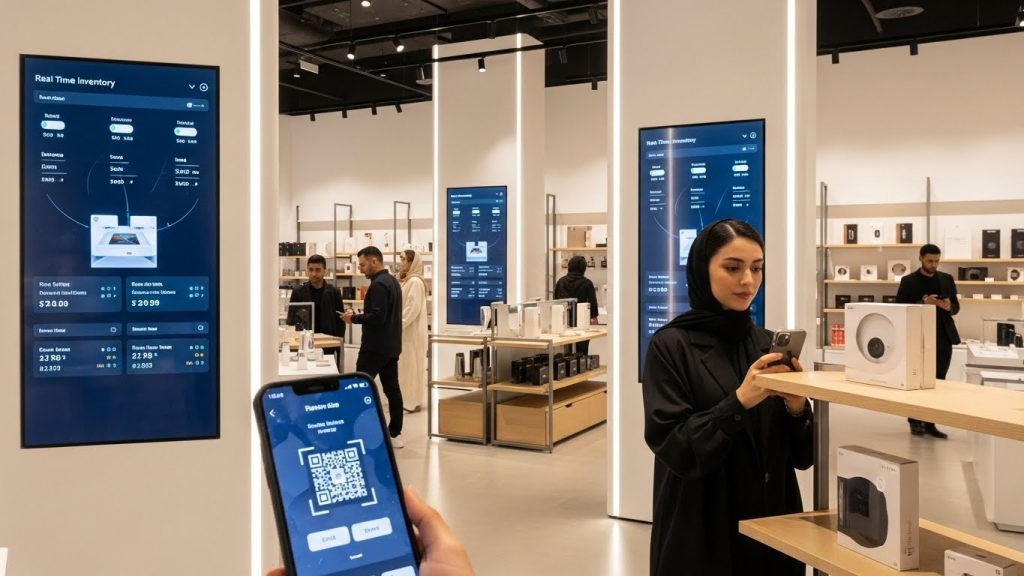
With a properly implemented system, a customer can start a transaction on one device, pause, resume on another, and complete it in store. Inventory is real time. Pricing is consistent. Loyalty points appear wherever the purchase happens.
LyraCX Commerce, the unified commerce platform we built at Knoativ, was designed for exactly this scenario. It connects product data, customer identity, pricing, and fulfillment into a single layer that sits beneath every touchpoint. The customer never sees the complexity. Instead, they just see a brand that remembers them.
The Role of Ecommerce Integration in Modern Retail
True ecommerce integration goes beyond connecting APIs. It creates a single source of truth across your entire operation.
When inventory, pricing, promotions, and customer data live in separate systems, every team makes decisions with incomplete information. For example, marketing runs promotions on products that are out of stock. Meanwhile, store teams quote different prices than the website. As a result, customers lose trust.
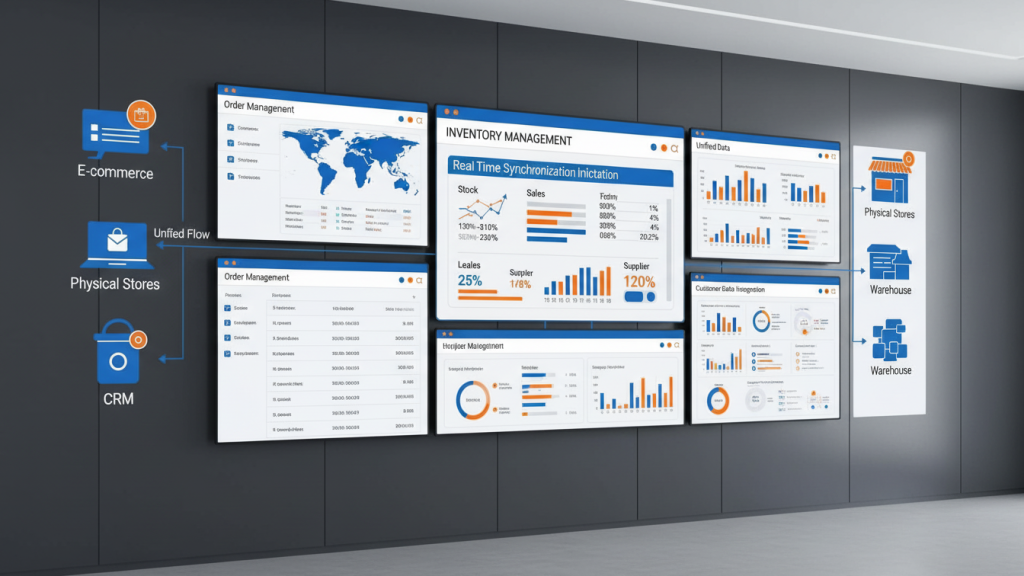
Effective multi channel ecommerce integration solves this by synchronizing data in real time. When a product sells in store, online inventory updates instantly. When a customer earns loyalty points online, they appear at checkout in the physical store.
Modern ecommerce order management software serves as the backbone of this integration, ensuring orders flow seamlessly from any channel to fulfillment without manual intervention.
A Before and After Story
A mid-market electronics retailer in the GCC faced a conversion problem. According to Baymard, average cart abandonment hovers around 70%, and this retailer was no exception. Customer complaints centered on price mismatches between online and in-store, stock discrepancies, and broken promotions. After implementing unified commerce solutions across their web, app, and 14 physical stores, results within 90 days showed:
Cart abandonment dropped by 23%
Average order value increased by 18%
Customer complaints related to pricing and stock fell by over 60%
The technology mattered. However, the real shift was simpler: customers trusted the experience again.
Ecommerce Integration Checklist for 2026
Audit your current stack for integration gaps between inventory, promotions, and customer data.
Map the customer journey across devices and channels to identify friction points.
Prioritize real time inventory visibility as the foundation of ecommerce integration.
Align your teams around a single source of truth for product and pricing data.
Invest in ecommerce order management software that connects all sales channels.
Measure success by conversion and CLV, not just traffic.
The Next Step
The brands that will lead GCC retail in 2026 are not those with the most channels. They are those with the fewest seams.
If your systems still force customers to restart their journey every time they switch devices, the cost is not just friction. It is trust.
Ready to explore how multi channel ecommerce integration can transform your retail operations?
Inventory sync or customer data unification: which one is breaking your customer experience first?