

When it comes to loyalty program trends 2026, every vendor has a glossy report packed with buzzwords and convenient conclusions.
This isn’t that. What follows is based on real program data, actual customer behavior, and patterns we’re seeing across retail brands right now. No vendor spin. Just what’s working and what isn’t.
Loyalty Program Trends 2026: Behavioral Rewards Are Winning
Here’s the shift that’s finally hitting critical mass. As a result, brands are moving away from “spend money, get points” toward rewarding engagement that doesn’t involve a purchase.
Why does this matter? Because research shows 75% of consumers want to be rewarded for engagement beyond purchase. In other words, three out of four customers feel undervalued when you only recognize them at checkout. That’s a problem.
Think about your own behavior. You follow a brand on social media, read their emails, recommend them to friends, and write reviews. However, none of that shows up in a traditional loyalty program. You’re invisible until you swipe your card.
Loyalty Program Trends 2026: Behavioral Rewards
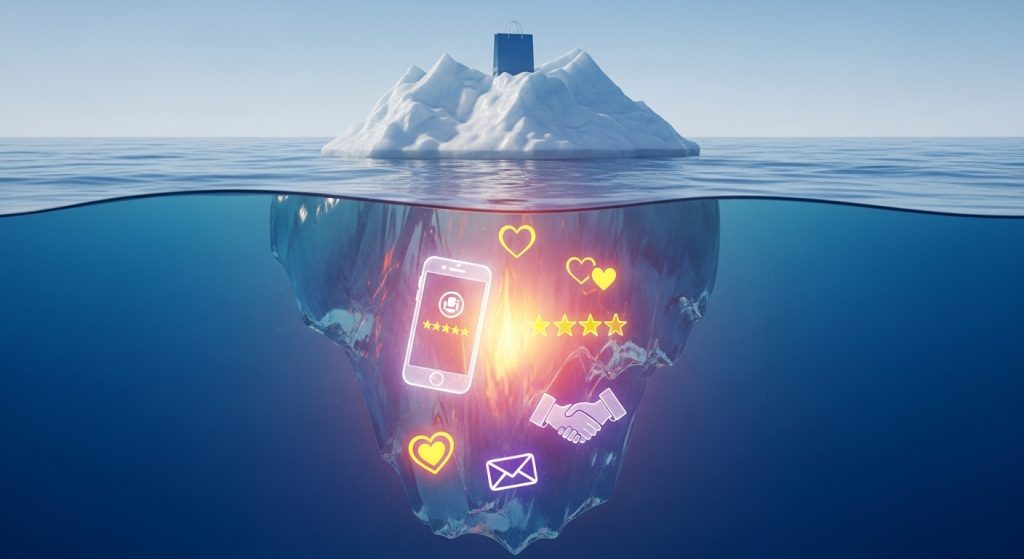
Brands only see the tip: 75% of customer value happens beyond the purchase, yet most loyalty programs ignore it completely.
For example, Sephora’s Beauty Insider program figured this out years ago. Members earn points for writing reviews, attending events, and engaging with content. As a result, the emotional connection runs deeper than any discount could create.
What behavioral engagement looks like in practice: profile completion earns points, product reviews unlock rewards, social sharing gets recognized, app engagement triggers bonuses, and event attendance builds status.
The psychology is simple. When you reward someone for investing time, not just money, you’re building a relationship. Therefore, any modern enterprise loyalty program now prioritizes these non-purchase touchpoints because transactions create customers, but relationships create advocates.
Trend 2: Why Instant Gratification Wins in 2026
The old model was elegant in theory. Earn points over months, then redeem for something meaningful later. However, that’s not how modern consumers think anymore.
Research shows instant rewards can increase basket sizes by 36%. Additionally, 78% of consumers prefer to access rewards online and want them immediately.
A leading GCC grocery retailer tested this directly. They moved from monthly point statements to real-time reward notifications. As a result, engagement tripled. Not improved slightly. Tripled.
Loyalty Program Trends 2026: Instant Rewards Psychology
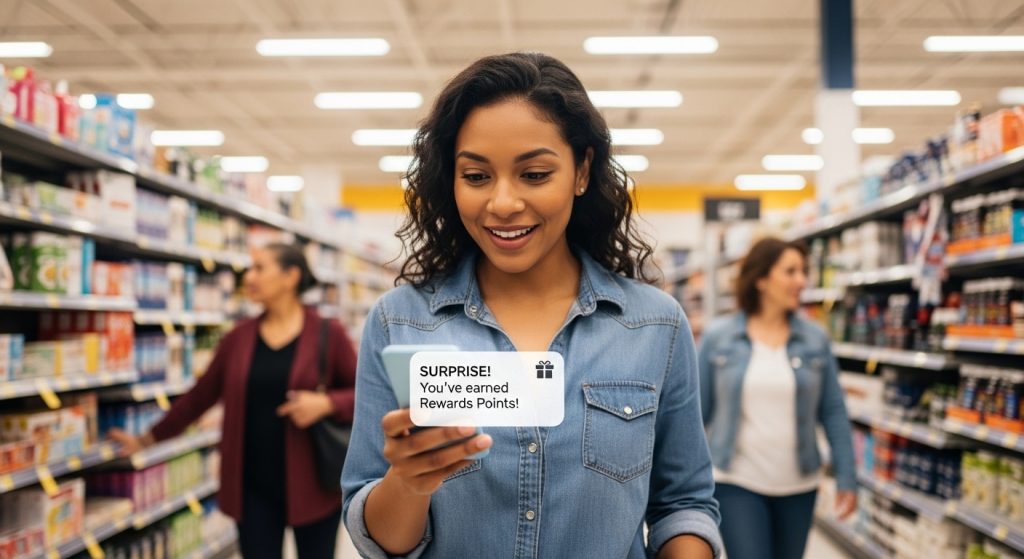
Instant recognition triggers dopamine: the best loyalty moments happen during the shopping experience, not six months later.
The shift is psychological. Instant recognition triggers dopamine, whereas delayed rewards trigger nothing. By the time a customer redeems points six months later, the emotional connection to the original purchase is gone. Consequently, they don’t associate that reward with your brand anymore.
What instant gratification looks like now: immediate discounts applied at checkout, real-time notifications when status changes, surprise rewards during the shopping experience, micro-rewards for small actions, and gamified challenges with instant payoff.
This requires serious backend infrastructure. You can’t deliver instant, relevant rewards without systems that process behavior in milliseconds. That’s where business process automation tools become essential for any program expecting to compete in 2026.
Loyalty Program Trends 2026: Personalization at Scale
“Hi [First Name]” stopped being personalization years ago. Similarly, showing someone the same product they already bought doesn’t count either. Yet that’s where most programs still operate in loyalty program trends 2026.
How AI Is Changing Loyalty Personalization
True personalization looks different now. According to research, 37.1% of program owners already use AI to manage their loyalty programs. Moreover, those companies report that AI enhances team productivity while delivering hyper-targeted offers.
For instance, Starbucks sets the benchmark here. Their Rewards program doesn’t just track what you buy. Instead, it learns when you buy, where you buy, and what you’re likely to want next. Offers arrive at precisely the right moment for precisely the right product.
What Modern Loyalty Personalization Requires
The difference between segment-level and individual-level targeting is massive. Segment-level says “coffee drinkers get a coffee offer.” In contrast, individual-level says “this person buys a latte every Tuesday at 8 AM, so send an offer Monday night.”
What real personalization requires: unified customer data across touchpoints, AI that identifies patterns humans miss, dynamic offer engines that adapt in real time, and testing frameworks that learn what works.
Modern ai automation services make this possible at scale. The technology exists. Therefore, the question is whether your current systems can execute on what customers now expect from loyalty program trends 2026.
Trend 4: Experiential Rewards Drive Loyalty in 2026
Discounts work. Nobody’s arguing that. However, they also train customers to wait for the next discount. That’s not loyalty. Instead, that’s price sensitivity with extra steps.
Research shows 62% of customers feel an emotional connection to the brands they buy from. As a result, the programs that nurture this connection focus on experiences, not just transactions.
Building Experiential Loyalty That Lasts
For example, Nike understands this perfectly. Their membership isn’t about saving money. Instead, it’s about access: early product drops, exclusive events, personalized training content. The emotional connection goes far beyond what any coupon could create.
Experiential rewards that build real loyalty: early access to new products, invitation-only events, behind-the-scenes content, priority customer service, and surprise upgrades.
The best programs balance transactional and experiential rewards. Discounts drive short-term behavior, whereas experiences drive long-term love. A robust customer loyalty platform enables both, letting you reward the wallet and the heart.
What’s Not Working in Loyalty Program Trends 2026
Some approaches that worked five years ago are now actively hurting programs. Here’s what to reconsider.
First, complex point systems nobody understands. If customers need a calculator to figure out their rewards, you’ve already lost them. Simplicity wins every time.
Second, generic earn-and-burn mechanics. “Spend $1, get 1 point, redeem 100 points for $1 off.” That’s not a loyalty program. Instead, that’s a rebate with extra steps and more friction.
Third, batch communications in a real-time world. For instance, sending the same email to everyone on Tuesday morning? In a world of instant everything, batch feels like getting a letter in the mail. Quaint, but irrelevant.
Finally, points that expire without warning. Nothing destroys trust faster than telling a customer their earned value just vanished. It feels like theft, even when it’s in the terms and conditions.
Loyalty Program Trends 2026: The Choice Ahead
Loyalty program trends 2026 point in a clear direction. Programs that reward behavior, deliver instant value, personalize genuinely, and create emotional connections will thrive. In contrast, programs stuck in the transactional past will watch engagement decline year after year.
The technology exists. The data exists. Moreover, the customer expectations are already here.
Loyalty in 2026 isn’t about points and tiers. It’s about making customers feel valued in every single interaction.
The brands that figure this out won’t just retain customers. Instead, they’ll create advocates who do the marketing for them.
If your program still runs on yesterday’s assumptions, it might be time to explore what modern loyalty infrastructure can actually deliver. And if you’re wondering where to start, sometimes the best first step is simply having a conversation about what’s possible.