Loyalty strategy
CPG Marketing: A Receipt Scanning Loyalty Playbook
How CPG brands recognize and reward buyers at any retailer, without owning the checkout.
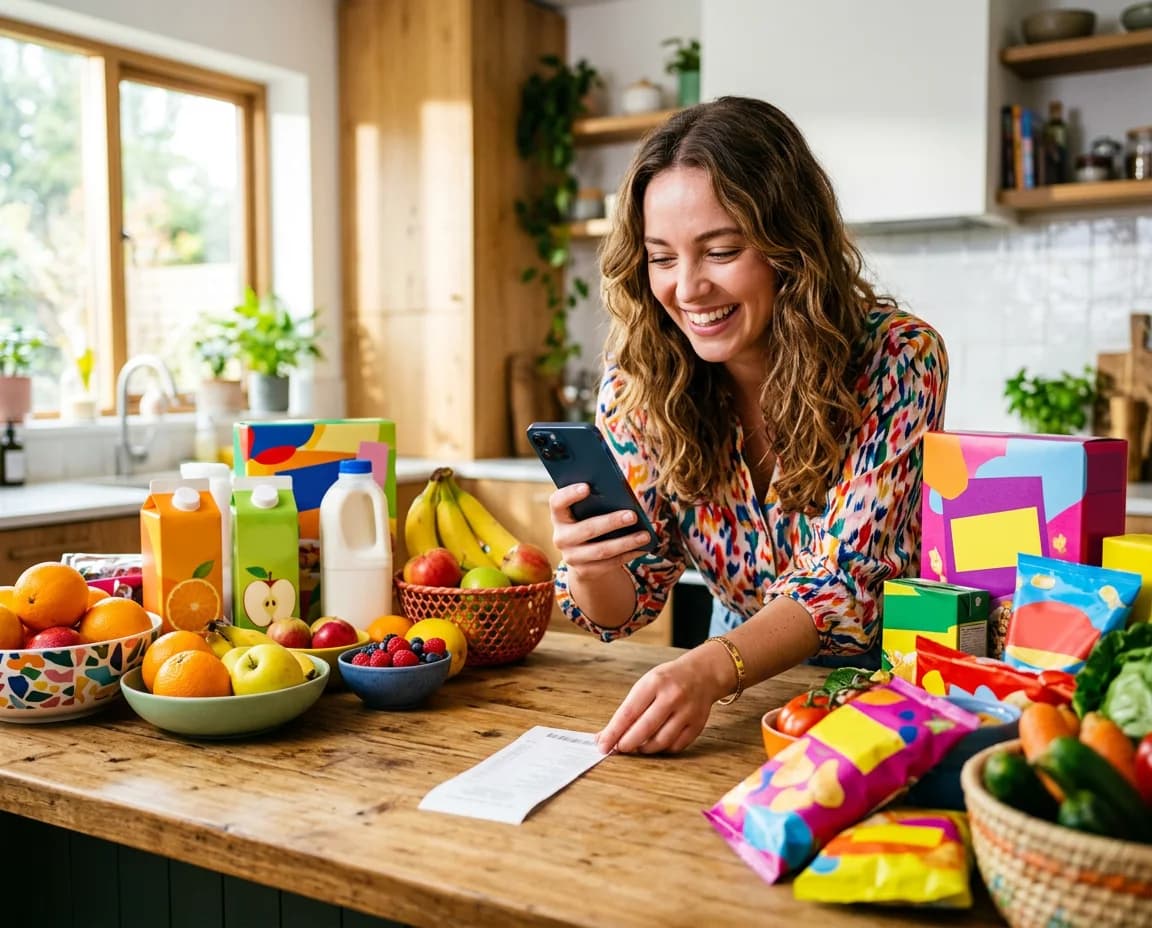
CPG marketing is the marketing of consumer packaged goods, the food, drinks, household and personal care products people buy often and use up quickly. Its core problem is that CPG brands sell through retailers' checkouts, so they rarely know who their buyers are. Receipt scanning gives brands a way to recognize, reward and learn from those buyers at any store.
If you run a brand sold through supermarkets, pharmacies, mass merchants and convenience stores, you know the gap. You see shipments to the retailer and, at best, aggregated sell-out weeks later. The retailer holds the receipt, the basket and the customer. This playbook covers how receipt-based loyalty works, what to reward, how to stop fraud, how to prove it with retailers, and the compliance basics to check before launch.
What is CPG marketing missing without first-party data?
CPG marketing without first-party data is aimed at an audience the brand cannot see. Most budget goes into trade promotions, media and retail media, and the results come back late, in aggregate, from someone else's data.
The same products are called FMCG (fast-moving consumer goods) outside the US; the problem is identical. A baby formula brand cannot tell which parents buy every two weeks, notice when one stops, or reach her before she switches. A snack brand cannot tell whether a new flavor brought in new buyers or just moved existing ones.
McKinsey has observed that CPG companies have struggled to collect personalized first-party data at scale, because they lack the direct consumer interactions that retailers and subscription services have, in its article on the new marketing model for CPG growth. Receipt-based loyalty is one practical way to build those interactions without going around your retail partners.
Why does first-party data matter for CPG marketing now?
First-party data matters for CPG marketing now because more of the budget is moving into channels where the retailer owns the data and decides how much to share. A brand with its own consented buyer data can plan, target and measure with less dependence on any one partner.
23% of brands said they can access in-flight retail media campaign metrics, in a Coresight Research survey commissioned by NIQ and reported in NielsenIQ's 2024 report on retail media measurement. In other words, most brands are spending on retailer channels while waiting for someone else's results.
Receipt data does not replace retailer data. It gives the brand its own view of a subset of buyers, verified purchase by purchase, with consent to talk to them directly. That is the asset CPG marketing teams have been missing.
How does receipt scanning work for brands?
Receipt scanning works in six steps, from purchase to reward. The shopper sees only the first and the last; everything in between decides whether the program is trusted and affordable.
- Purchase. The shopper buys your product at any participating store.
- Capture. She photographs or uploads the receipt in your app or on a web page, ideally after leaving the store, not in the checkout line.
- Read. Optical character recognition extracts the retailer, store, date, time, receipt number, line items, prices and total.
- Match. Each line is matched to your product catalog. This is harder than it sounds: every retailer abbreviates product names differently, so one pack can appear under several short descriptions across chains.
- Validate. Receipt validation and fraud checks run before any reward is issued.
- Reward. Points, stamps or cashback land on the shopper's profile, and the purchase joins her history.
TipBuild and maintain a line-matching dictionary per retailer from day one. Many rejections of honest shoppers come from product lines the system could not match, and every false rejection teaches a loyal buyer to stop scanning.
CPG loyalty programs that work: the Receipt Reward Ladder
CPG loyalty programs work when they reward the purchases and behaviors that would not happen on their own, and pay less for those that would. The Receipt Reward Ladder sets a different reward for each step, from the first scan to advocacy.
| Rung | Behavior to reward | Example reward | Watch out for |
|---|---|---|---|
| 1. Join | First valid receipt with your product | Welcome bonus that gets the shopper close to a first reward | Paying so much that deal-seekers join once and leave |
| 2. Repeat | Second and third purchase within a set window | Digital stamp card: buy 5, get one free | Windows so long they reward normal buying |
| 3. Range | First purchase of another product or variant | Bonus points on the first purchase of the new item | Rewarding the same switch twice |
| 4. Trade up | Larger pack or premium line | More points per dollar on premium products | Clashing with a promotion the retailer is already running |
| 5. Frequency | Purchases in consecutive weeks or months | Streak bonus, badge or tier upgrade | Encouraging stockpiling instead of steady buying |
| 6. Win back | First purchase after a long gap | Personal offer timed to the shopper's usual cycle | Training shoppers to lapse in order to get the offer |
| 7. Share | Completing a profile, a review or a referral | Small points bonus | Fake referrals and low-quality reviews |
The common mistake is a flat "points for every pack" rule. It pays your most loyal buyers for what they already do and gives a light buyer no reason to buy more. The same logic applies to retailer programs, as our guide on how to build customer loyalty explains.
Start with two rungs, usually Join and Repeat, and add others only when the holdout shows the first two are paying back.
Know your buyers even when the checkout belongs to someone else. Valus Loyalty captures identity through receipt scanning when you do not own the point of sale, and runs points, cashback and stamps on one shopper profile. Our receipt-based loyalty pilot plan maps the first two rungs of the ladder for one of your product lines. Get a receipt-based loyalty pilot plan.
Receipt validation: how do you stop receipt fraud?
Receipt validation means checking every receipt against rules before a reward is issued: is it unique, recent, from a known store, internally consistent, and within normal limits for this shopper. Doubtful cases go to a person, not straight to a reward.
Any program that pays for a photo will attract people who try to fake the photo. Image generators can now produce convincing fake receipts, and the file metadata that might expose them can be removed, as Computerworld reported on AI-generated expense receipts in 2025. Treat fraud controls as part of the program design.
| Fraud pattern | What it looks like | Control |
|---|---|---|
| Duplicate receipts | The same receipt submitted twice, or by two accounts | Fingerprint each receipt from retailer, store, date, time, receipt number and total; reject repeats across all accounts |
| Edited or generated receipts | Changed quantities, swapped lines, or a receipt that never existed | Check that totals and tax add up, compare layout with known templates for that retailer, flag image anomalies, send doubtful cases to review |
| Collected receipts | Receipts picked up from bins or checkouts and scanned by someone else | Short window after purchase, caps per receipt, flags for accounts scanning many stores in one day |
| Scan farming | Many accounts on one device, or one account scanning far above normal | Rate limits per member, device and day; limits on accounts per device and phone number |
| Unknown stores | Receipts from shops that do not stock the product, or do not exist | List of eligible retailers and formats; review receipts from new stores before they count |
Balance matters. Every control that stops a fraudster also risks rejecting an honest shopper with a crumpled receipt. Track false rejections as closely as fraud, and give shoppers a simple way to ask for a review.
What receipt data gives you, and what it doesn't
Receipts give you verified purchases tied to a known, consented buyer: which of your products, at which retailer and store, when, and at what price, plus purchase frequency and the gap between purchases. They do not give you shoppers who never scan, the retailer's own loyalty data, or a representative sample of your market.
The bias is the part to remember. Scanners are self-selected and skew toward your keenest, most deal-aware buyers. Receipt data is excellent for spotting lapses, testing offers and talking to buyers one by one. It is a weak basis for market share. Note too that a sudden drop at one chain can be a stock-out rather than a switch; retailers working on retail inventory management see the same problem from the other side of the shelf.
How do you measure incrementality with retailers?
You measure incrementality by holding out a random group of eligible members from each offer and comparing their purchases with members who received it. The difference, converted to margin and minus the reward cost, is what the program earned.
- Define the eligible group, for example every member who bought once in the last 60 days.
- Randomly hold out a share, often around 10%, and send the offer to the rest.
- Compare repeat purchase rate and spend per member across both groups over a full purchase cycle, using validated receipts.
- Cross-check with retailer sell-out where you can, by chain and region, to see whether the receipt signal matches the market.
- Report incremental margin, not scans or redemptions.
Keep retailers on side by making the program drive shoppers into their stores, not around them. Reward purchases at every retailer that stocks you unless you have agreed an exclusive campaign, avoid cashback that undercuts their shelf price, share aggregated insight such as repeat rates by store format (never individual shoppers' data), and brief them before launch. Co-funded campaigns that reward buying at one chain during its own promotion give both sides a reason to cooperate. Our page for distributors and wholesalers covers programs that span many brands and outlets.
Compliance basics: privacy, prize draws and local receipt rules
A receipt program collects personal and purchase data and often runs prize draws, so it needs legal review in every market before launch. The points below are orientation, not legal advice.
- Privacy (US and elsewhere). Receipts show the whole basket, including other brands. Say clearly what you collect and why, ask for consent, collect only what your privacy notice covers, and check the state privacy laws that apply to your shoppers.
- Prize draws. US sweepstakes rules are set largely at state level, and a draw that requires a purchase to enter can run into lottery laws. Have counsel review any draw, its official rules and any free method of entry.
- Retailer terms. Some retailers restrict how their name and logo appear in brand promotions. Check before you list them.
Local receipt formats, a GCC example. Receipt rules differ by market, and they can help validation. Since 4 December 2021, simplified tax invoices in Saudi Arabia, the kind usually issued to consumers, must carry a QR code, according to ZATCA's e-invoicing guidance. Reading that code gives a machine-readable source to check against the printed receipt. Programs in the region also need OCR that reads Arabic and bilingual receipts, and capacity for scan peaks around Ramadan and Eid.
Where to start
Start narrow. Pick one product line, the three or four retailers that sell most of it, and two rungs of the Receipt Reward Ladder: a first-scan welcome and a repeat-purchase stamp card. Set up the validation rules above, a manual review step and a holdout, then run it for a full purchase cycle before adding more.
Knoativ designs receipt-based programs for brands and distributors, including the reward ladder and funding model, and runs them on Valus Loyalty as a managed service. See how this fits FMCG and CPG brands and our approach to identifying, engaging and retaining customers. For the retailer side of keeping buyers, read how to improve customer retention.
If you sell through other people's checkouts and want to know your buyers, ask for a receipt-based loyalty pilot plan. We will map the ladder, validation rules, holdout and retailer list for one of your product lines.
Frequently asked questions
What is CPG marketing?
CPG marketing is the marketing of consumer packaged goods such as food, drinks, household and personal care products, which people buy often and use up quickly. Because these brands sell mostly through retailers, CPG marketing relies heavily on trade promotions, media and retail media, and usually lacks direct data on individual buyers. Receipt-based loyalty is one way to build that data.
How does receipt scanning work?
Receipt scanning works by having a shopper photograph or upload a receipt from any store. The system reads the retailer, date, items and prices, matches lines to the brand's products, runs validation and fraud checks, and then adds points, stamps or cashback to the shopper's profile. The brand gains a verified purchase tied to a known, consented buyer.
What is receipt validation?
Receipt validation is the set of checks a program runs before rewarding a receipt: whether it is a duplicate, how old it is, whether the store is eligible, whether totals and tax add up, and whether the shopper is scanning far above normal. Doubtful receipts go to human review. Good validation also tracks false rejections, so honest shoppers are not turned away.
Do CPG loyalty programs work?
CPG loyalty programs work when they reward behaviors that would not happen on their own, such as a repeat purchase within a set window, trying another product, trading up or returning after a gap. A flat reward on every pack mostly pays loyal buyers for what they already do. Prove results with a random holdout group and report incremental margin.
Do retailers object to brand receipt programs?
Retailers can object if a receipt program looks like a way around them. They are usually supportive when it rewards purchases in their stores, does not undercut their pricing, shares aggregated insight rather than individual data, and includes co-funded campaigns. Brief retail partners before launch and ask shoppers to scan after checkout so lines keep moving.